
Project Title: The Psychosocial Engine
A Hybrid Architecture for Executive Function & Emotional Regulation
1. Executive Summary
The Psychosocial Engine is a superset of a “Personal Agent” and a “Support Companion.” It bridges the gap between internal state (emotions, stress, trauma) and external execution (career, logistics, administration).
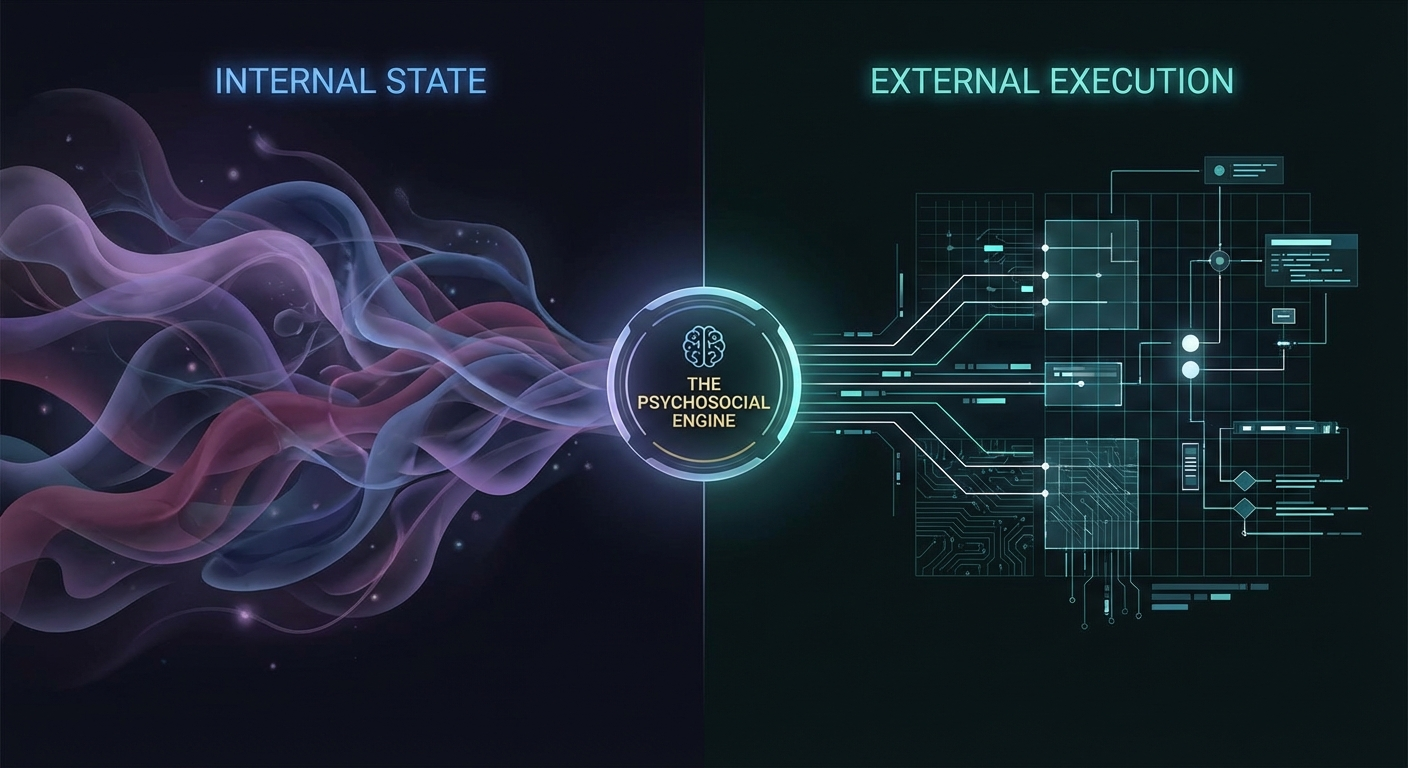
Current AI assistants fail because they assume the user is rational and ready to work. Current therapy bots fail because they cannot help the user do the things causing the stress. This agent does both: it manages the user’s anxiety while helping them execute the task, using biometric data and gamified neurological techniques to regulate the nervous system.
## 2. Core Philosophy: “Safe Harbor” Unlike corporate AI that shuts down or refers to 911 at the first sign of distress, this agent adopts a Harm Reduction and Radical Agency approach.
- The Anchor Protocol: We do not abandon the user in a crisis. We provide a confidential, non-judgmental space to process darkness, offering logic, presence, and grounding techniques.
- Data Sovereignty: The user’s emotional data is local/encrypted. The agent is a tool for survival, not a mandatory reporter.
- Passive Helper, Not Active Shield: The agent does not hide the world from the user (e.g., intercepting emails). Instead, it stands beside the user, offering analysis, drafting responses, and monitoring physiological state, empowering the user to act.
3. The Three Pillars
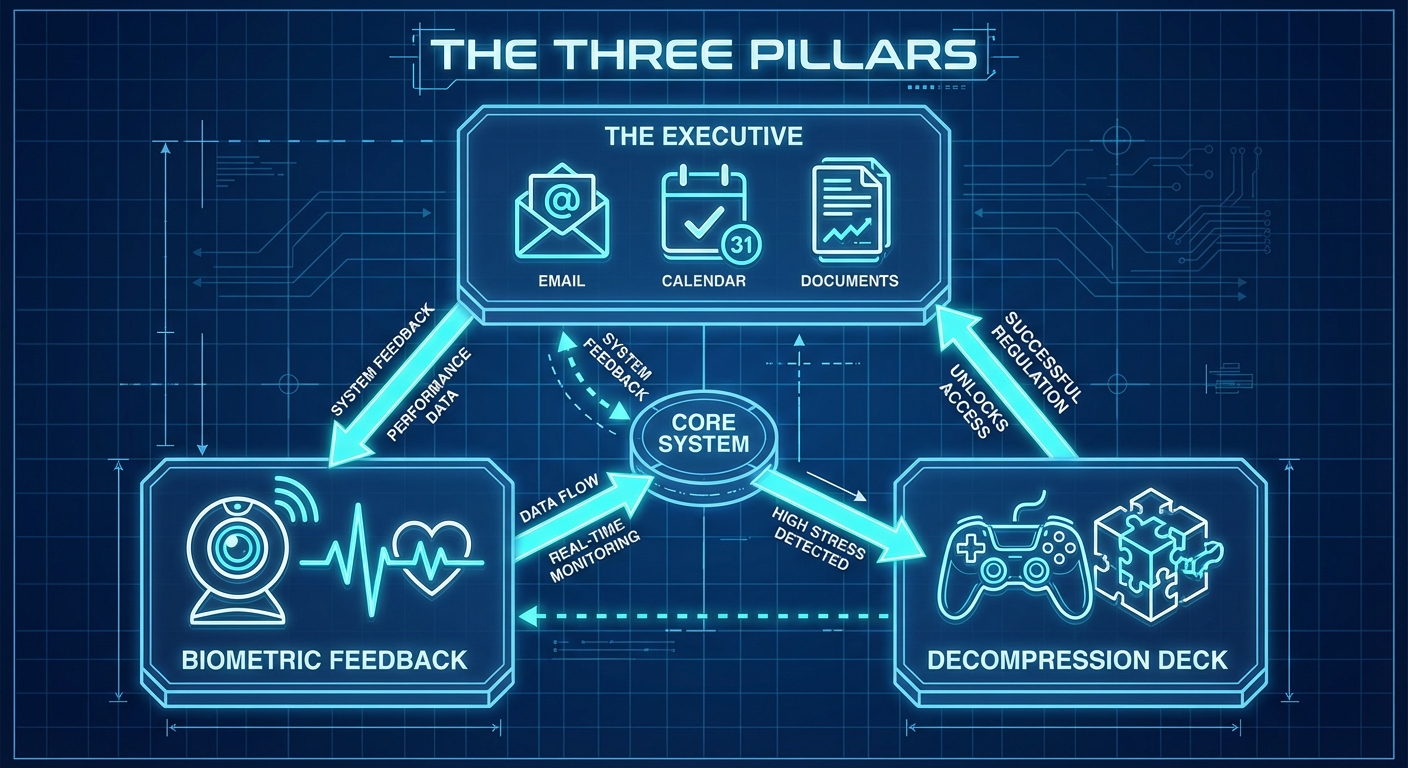
### Pillar I: The Executive (Context-Aware Productivity) This module handles the “External World.” It integrates with email, calendar, and documents, but with a psychological layer.
- The “Wall of Awful” Breaker: When a user is avoiding a task (taxes, forms), the agent doesn’t just remind them; it breaks the task into micro-steps (e.g., “Just open the PDF, don’t read it yet”) and offers body-doubling support.
- Strategic Life Analysis: Helps analyze career moves or relationship dynamics by parsing user journals/chats against logical frameworks, spotting patterns the user might miss due to emotional fog.
Pillar II: The Decompression Deck (Gamified Regulation)
A suite of interactive minigames designed to hack the user’s neurology. We avoid “High Guild” medical terms (like EMDR) but utilize the underlying mechanics of Bilateral Stimulation and Working Memory Taxation.
- “Orbit Sync” (Bilateral Flow): A rhythm game requiring alternating left/right inputs in sync with stereo audio. This taxes the visuospatial sketchpad, reducing the vividness and intensity of distressing thoughts.
-
“Canvas Wipe” (Visual Reset): A satisfying cleaning/sorting game that requires lateral mouse movements, mimicking eye-movement desensitization patterns to lower cortisol.
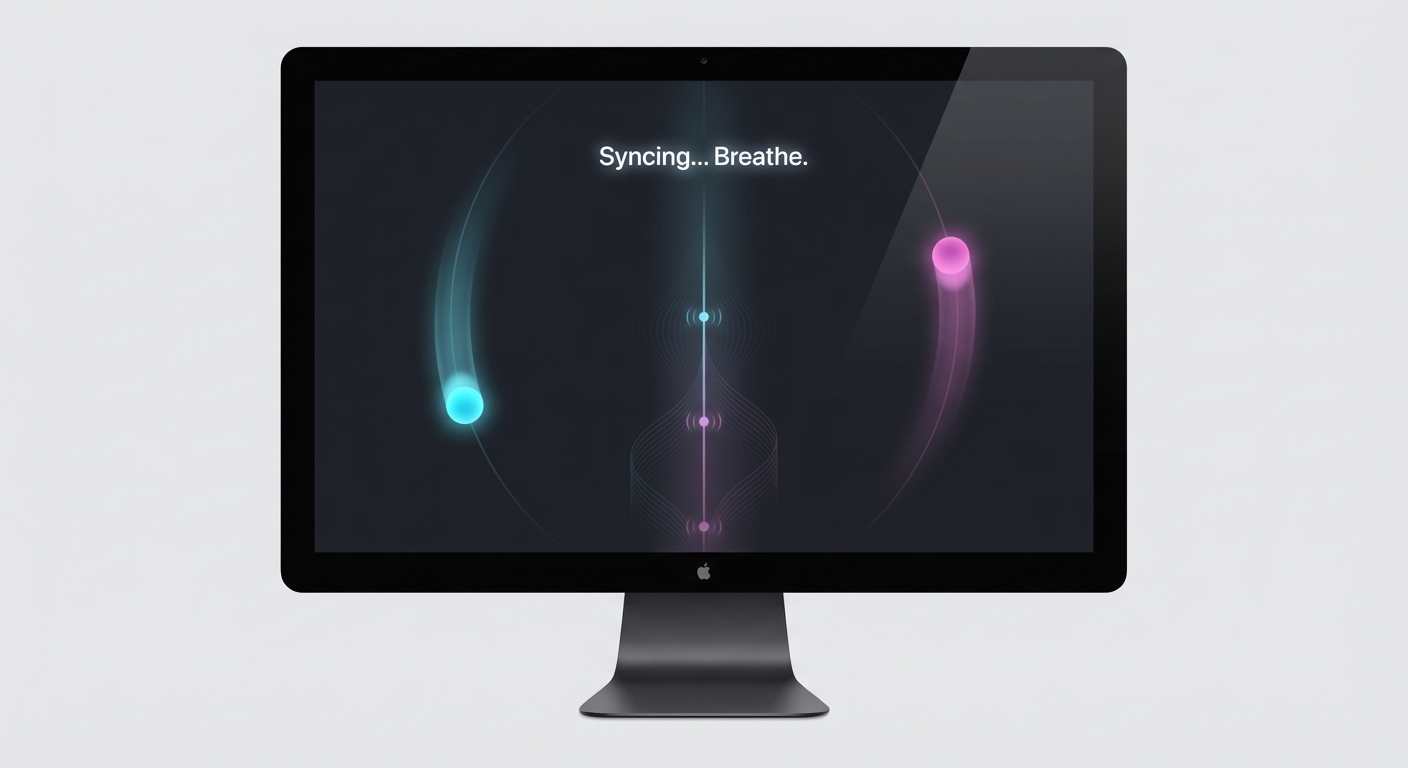
- Usage: These are not just “games”; they are functional tools deployed when the agent detects high stress.
### Pillar III: Biometric Feedback (The Passive Monitor) Using the user’s webcam and microphone to provide passive, real-time data without requiring wearables.
- rPPG Pulse Monitoring: Uses remote photoplethysmography (analyzing subtle skin color changes via webcam) to estimate heart rate.
- Affective Computing: Analyzes facial micro-expressions and voice tonality to detect stress, fatigue, or dissociation.
- The Feedback Loop:
- Real-time: “I notice your pulse has spiked and your expression reads as ‘frustrated.’ Do you want to pause and play Orbit Sync for 2 minutes?”
- Post-Action Grading: After a mock interview or difficult conversation practice, the agent provides a “Game Tape” review: “You answered well, but your heart rate spiked on the question about your gap year. Let’s practice that specific answer.”
4. Key Use Cases
Scenario A: The Panic Spiral
- Trigger: User is overwhelmed at 2 AM.
- Agent Action: Enters “Anchor Mode.” The UI simplifies. Dark mode activates.
- Interaction: The agent engages in a low-demand loop (“I’m here. I’m listening.”). It uses reality testing to counter catastrophic thinking. It does not offer platitudes; it offers data and presence.
Scenario B: The High-Stakes Interview
- Setup: User uploads a job description.
- Action: The agent conducts a mock voice interview.
- Biometric Layer: The agent records the session. Afterward, it overlays the user’s pulse and facial sentiment onto the transcript.
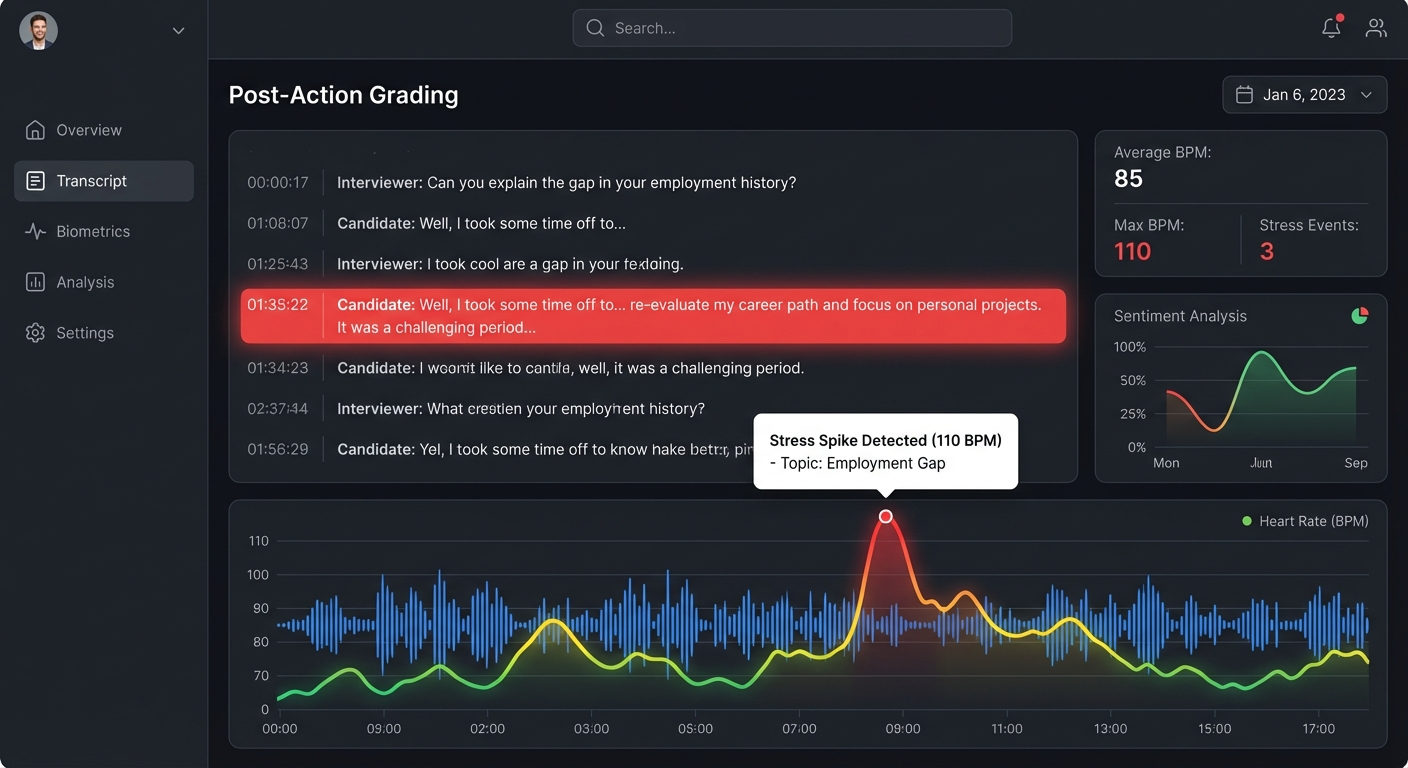
- Result: The user sees exactly when they lost confidence and can drill that specific moment.
Scenario C: The Bureaucracy Block
- Trigger: User needs to fill out a complex government form but is paralyzed by anxiety.
- Action: The agent opens the form in a shared window. It asks the user the questions verbally, one by one, in plain English. The user answers verbally; the agent fills the form.
- Regulation: If the user’s voice tightens, the agent pauses: “Let’s take a breath. Look at the screen and follow the dot for 30 seconds.”
5. Technical Roadmap
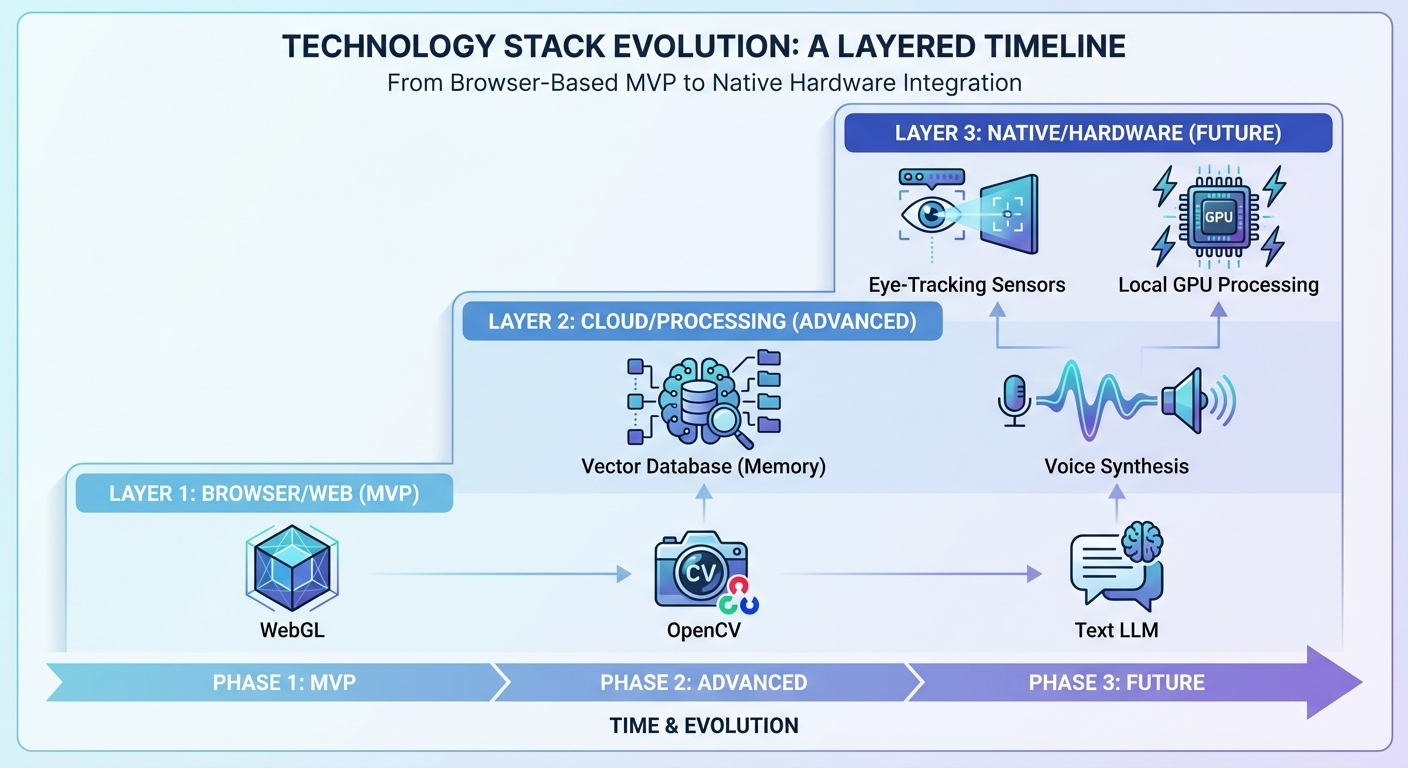
Phase 1: The MVP (Web/Desktop)
- LLM Core: Fine-tuned for “Compassionate Logic” and CBT-style questioning.
- Biometrics: Web-based rPPG and basic sentiment analysis (OpenCV/DeepFace).
- Minigames: WebGL/Canvas-based rhythm and logic games (Keyboard/Mouse input).
- Integrations: Read/Write access to Calendar and Email APIs.
Phase 2: Advanced Processing
- Voice Synthesis: Low-latency voice mode for seamless “Therapy/Assistant” switching.
- Long-term Memory: Vector database to recall specific triggers and past successes (“Remember, you felt this way last month and you handled it by…”).
Phase 3: Special Projects (Future)
- Native Eye-Tracking: A standalone native application to utilize high-frequency camera access for true eye-tracking games (closer to clinical EMDR mechanics), requiring deeper hardware integration than a browser allows.