
Project: Entropy-Aware Reversible Computing Compiler
A compiler framework for reversible logic gates (Fredkin/Toffoli) that minimizes thermodynamic cost by tracking entropy generation and optimizing garbage bit un-computation.
A compiler framework for reversible logic gates (Fredkin/Toffoli) that minimizes thermodynamic cost by tracking entropy generation and optimizing garbage bit un-computation.
A design document for a Kotlin library implementing Constructive Real Arithmetic, focusing on exactness, lazy evaluation, and arbitrary precision for real numbers.
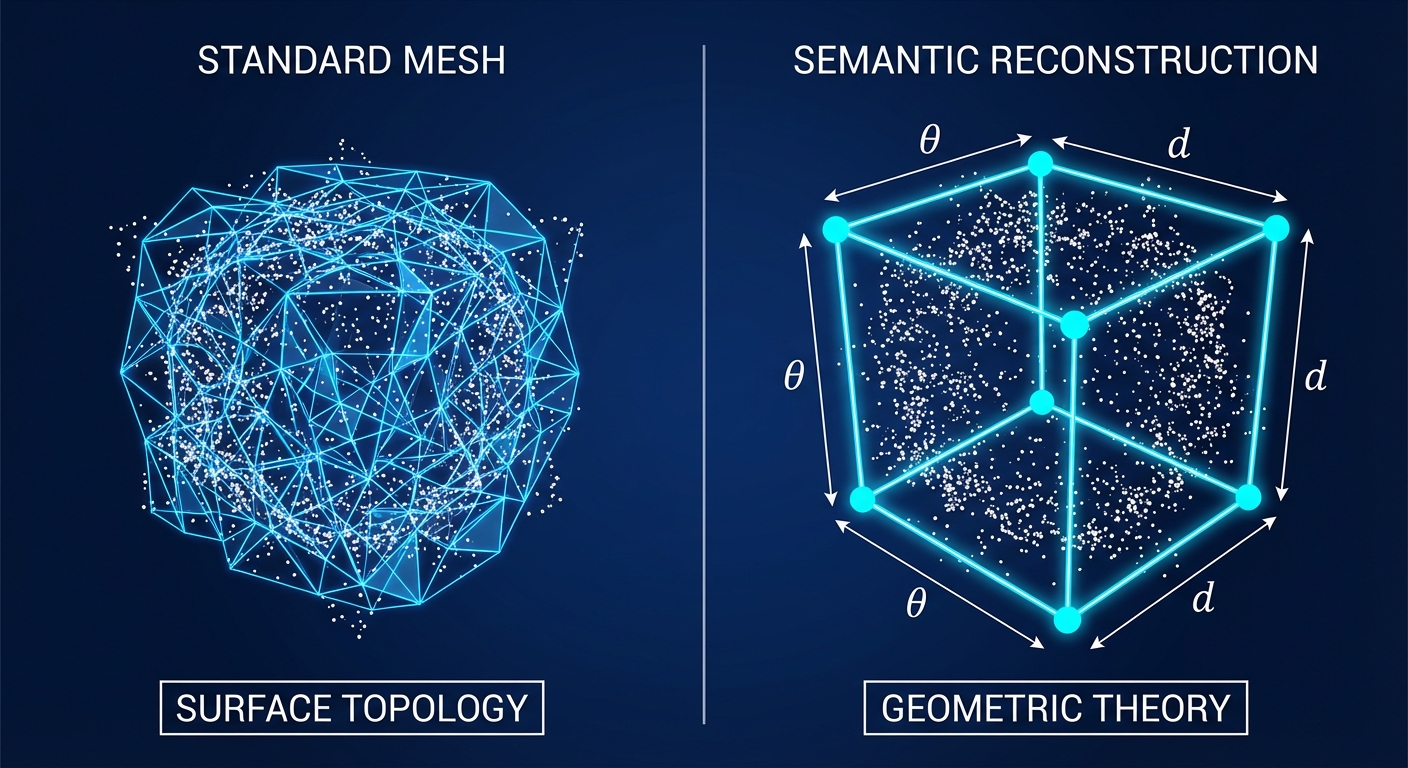
Project specification for a Geometric Theory Inference Engine, aiming for semantic reconstruction of point clouds via evolutionary CSG discovery and a hybrid optimization approach.
Explores the 'Binary Coded Layered Automata,' a hybrid simulation merging Langton's Ants and Conway's Game of Life to model neural plasticity and electrochemical activity through distinct temporal layers.
A machine-consumable patch format using directed acyclic graphs to represent code changes as semantic operations rather than line-based diffs.
Comprehensive mathematical specification for a permutation-based full-text indexing system extending the Burrows-Wheeler Transform with regex pattern matching and genomic applications.
High-performance C++ library for managing arbitrarily large bit-packed arrays using memory mapping and external sorting algorithms for permutation ring operations on billion-element datasets.
Comprehensive functional requirements specification for the BCLA Simulation Toolkit, a research platform for studying emergent computational phenomena in autonomous agent systems and constrained cellular automata.
A novel compression algorithm that simultaneously achieves high-precision spatial data compression and produces analysis-ready intermediate representations for computer vision and graphics applications.
Mathematical framework for cross-camera island matching and 3D object localization using view-aligned scanlines and epipolar constraints
A framework for generating interactive narrative multiverses using Causal Set Theory, where documents become spacetime events and reader choices determine causal relationships.
A novel computational framework combining wavelet-decomposed geographic topology with deep neural cellular automata for learning geospatial dynamics from observational data
A framework for creating environments that foster hypothesis generation and scientific creativity through systematic exploration.
A novel dual-constraint training methodology that preserves intellectual diversity while enabling continued learning in neural networks through adaptive anomaly preservation and trust region approaches.
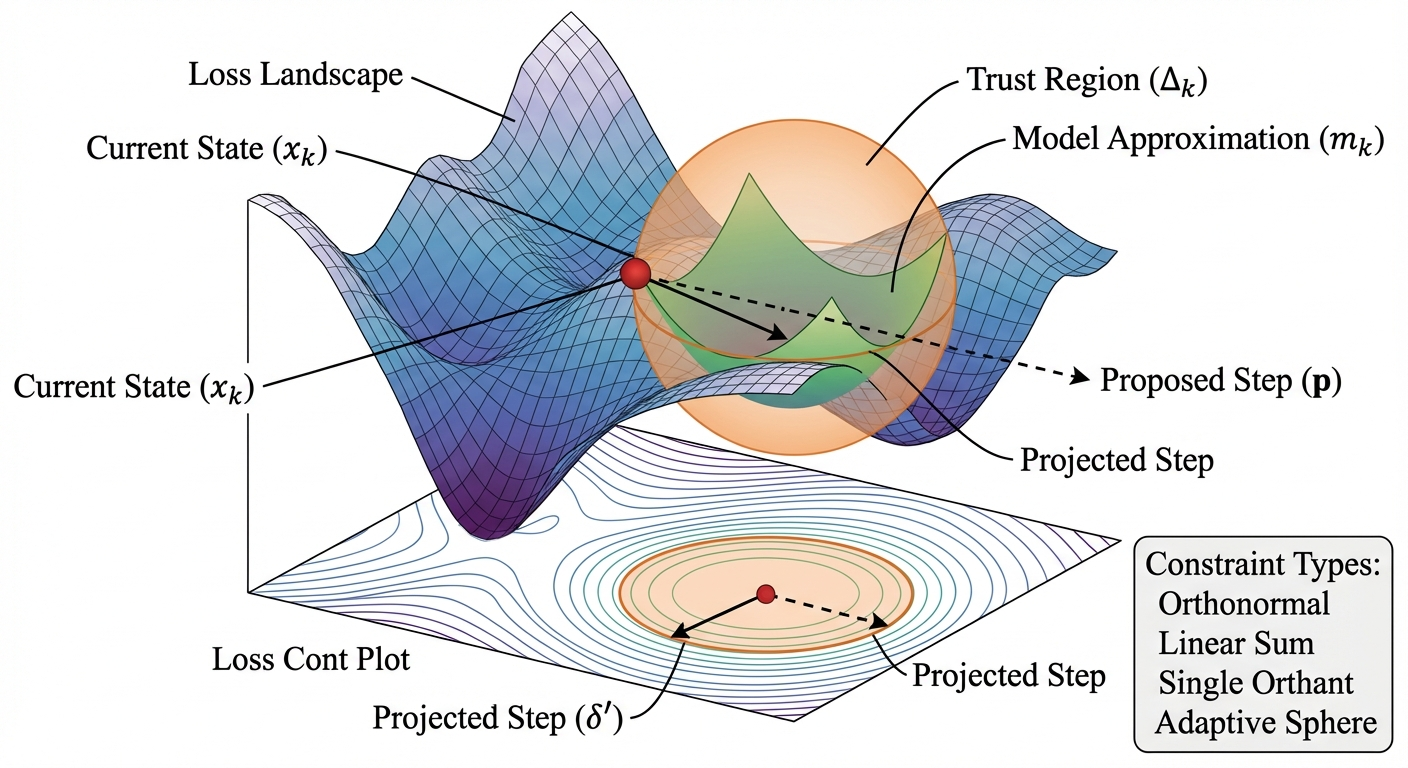
Comprehensive software framework for implementing trust region methods in neural network optimization with Java MindsEye library
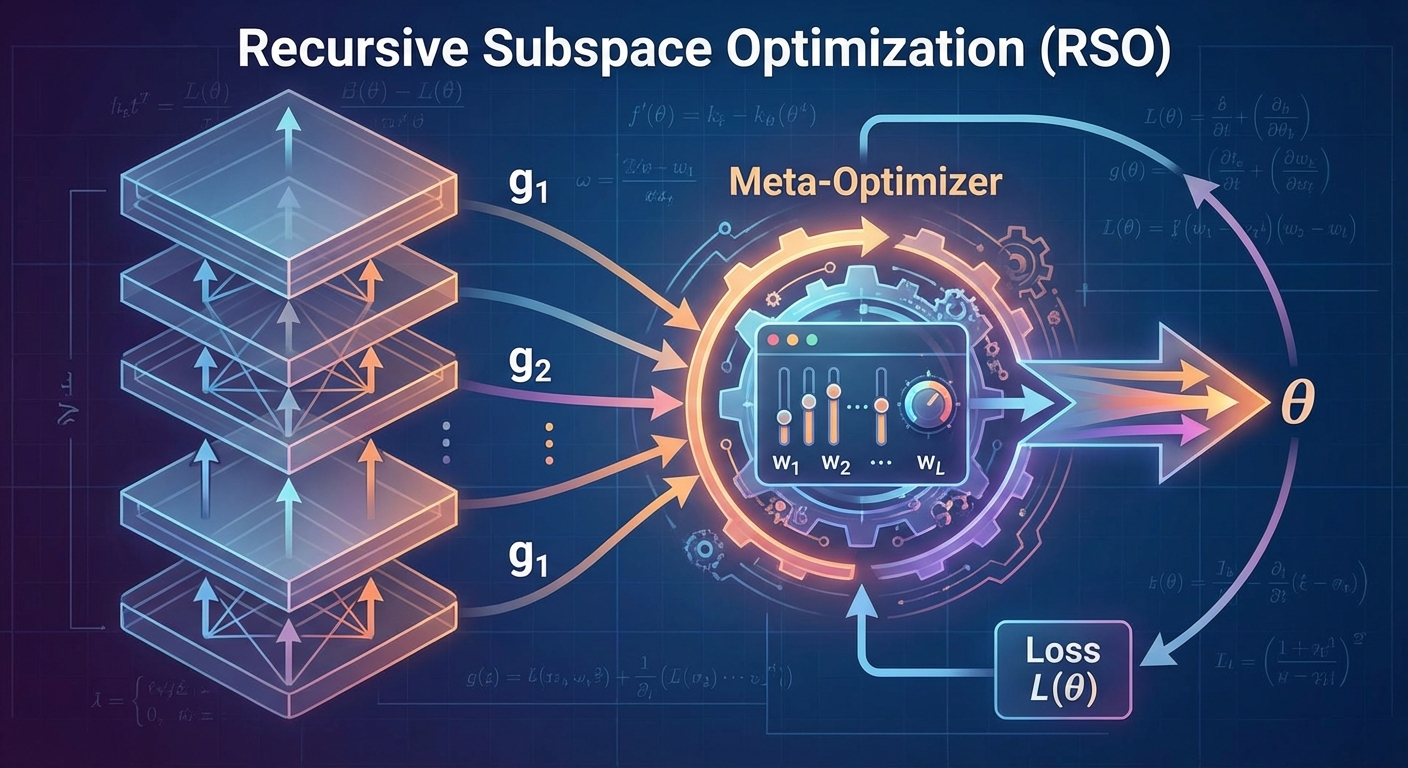
A novel optimization algorithm that improves deep neural network training by decomposing gradients into layer-wise components and using meta-optimization to find optimal combinations.
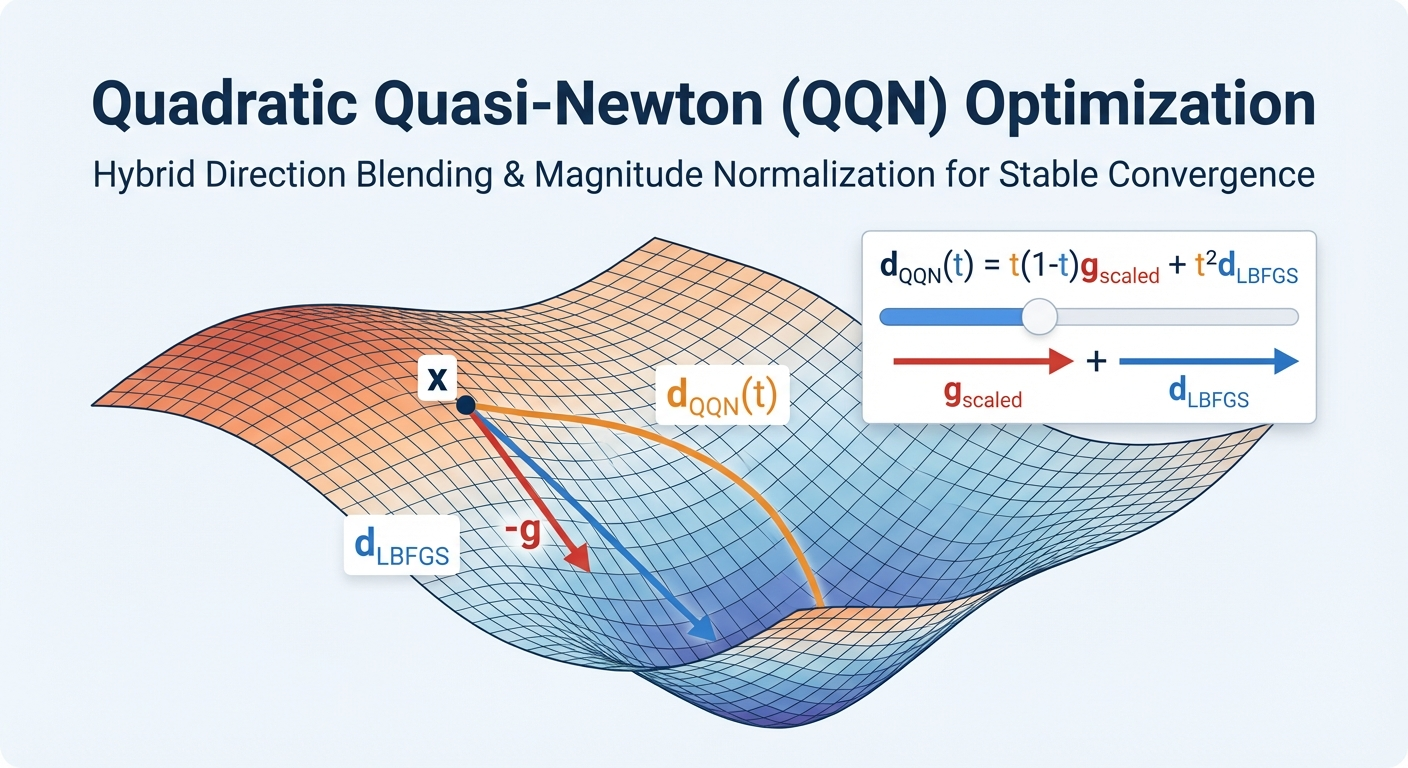
Novel optimization algorithm hybridizing L-BFGS with gradient descent through quadratic interpolation and magnitude-based normalization
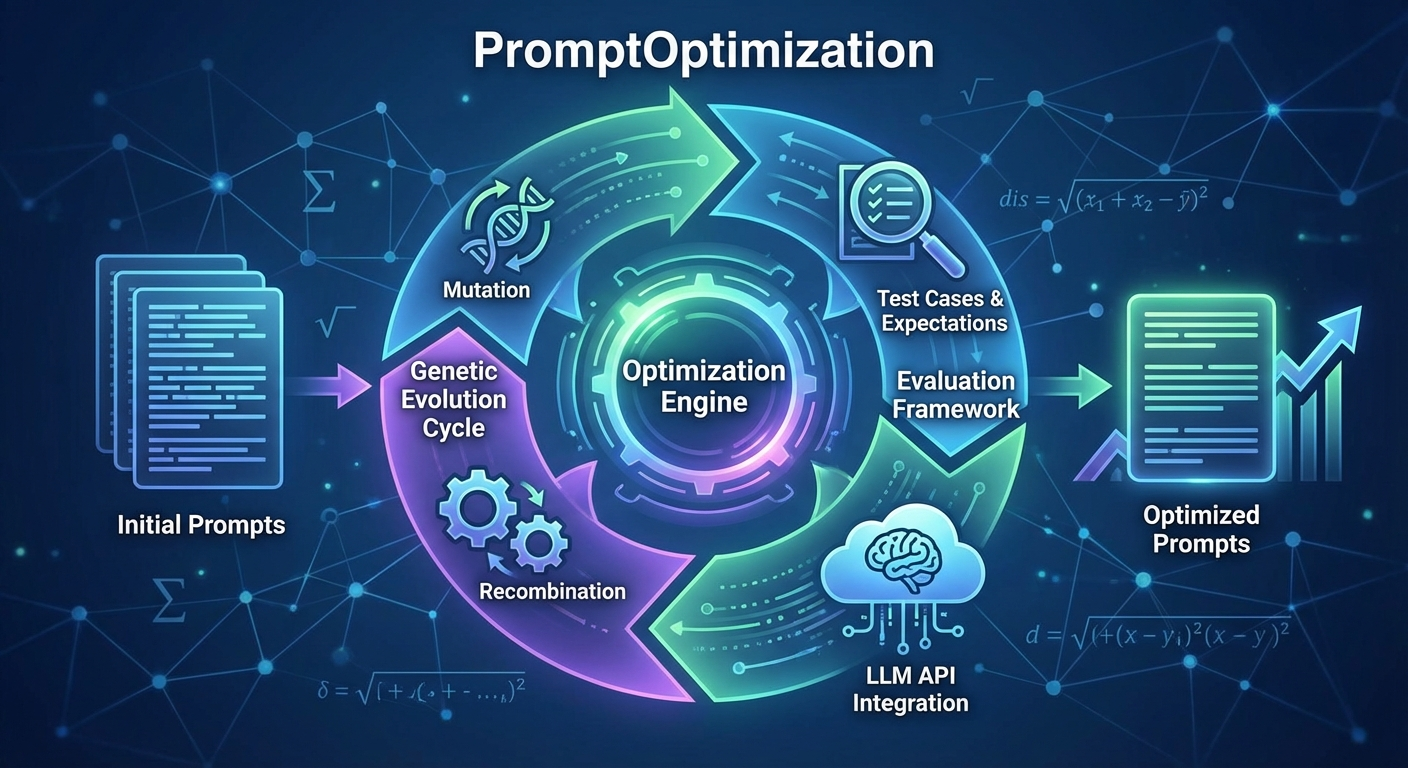
A comprehensive framework for automated prompt optimization using genetic algorithms, enabling systematic improvement of Large Language Model prompts through evolutionary computation.
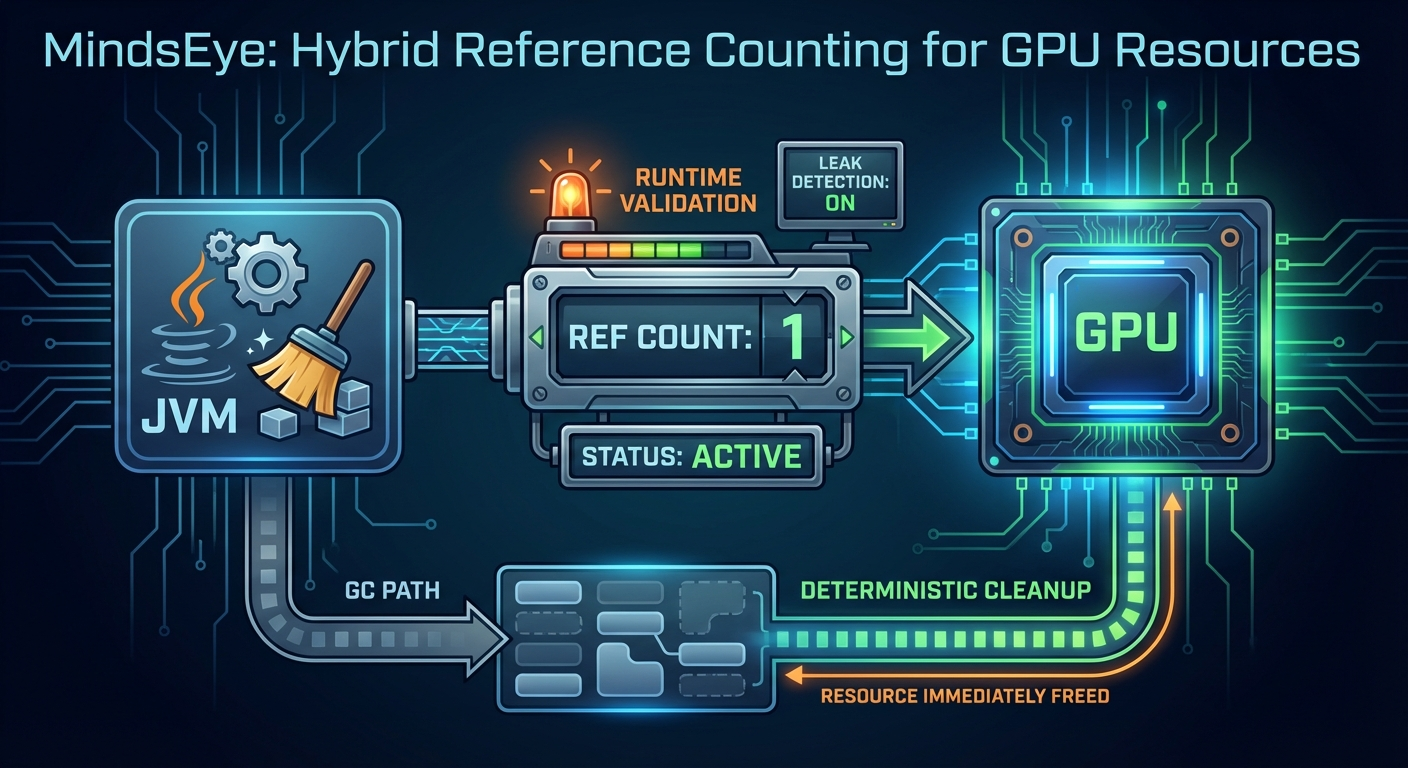
An in-depth analysis of MindsEye's sophisticated reference counting approach for GPU memory management in Java ML frameworks
Exploring reality as an optimized computational system using hashlife-like algorithms to simulate quantum field dynamics
A novel computational approach to knot theory using distance matrices and persistent homology for efficient knot classification with 88.6% accuracy and 15× speedup over traditional methods.
Novel tree-based data structure integrating optimal coding theory with permutation algebra for entropy-adaptive string processing.
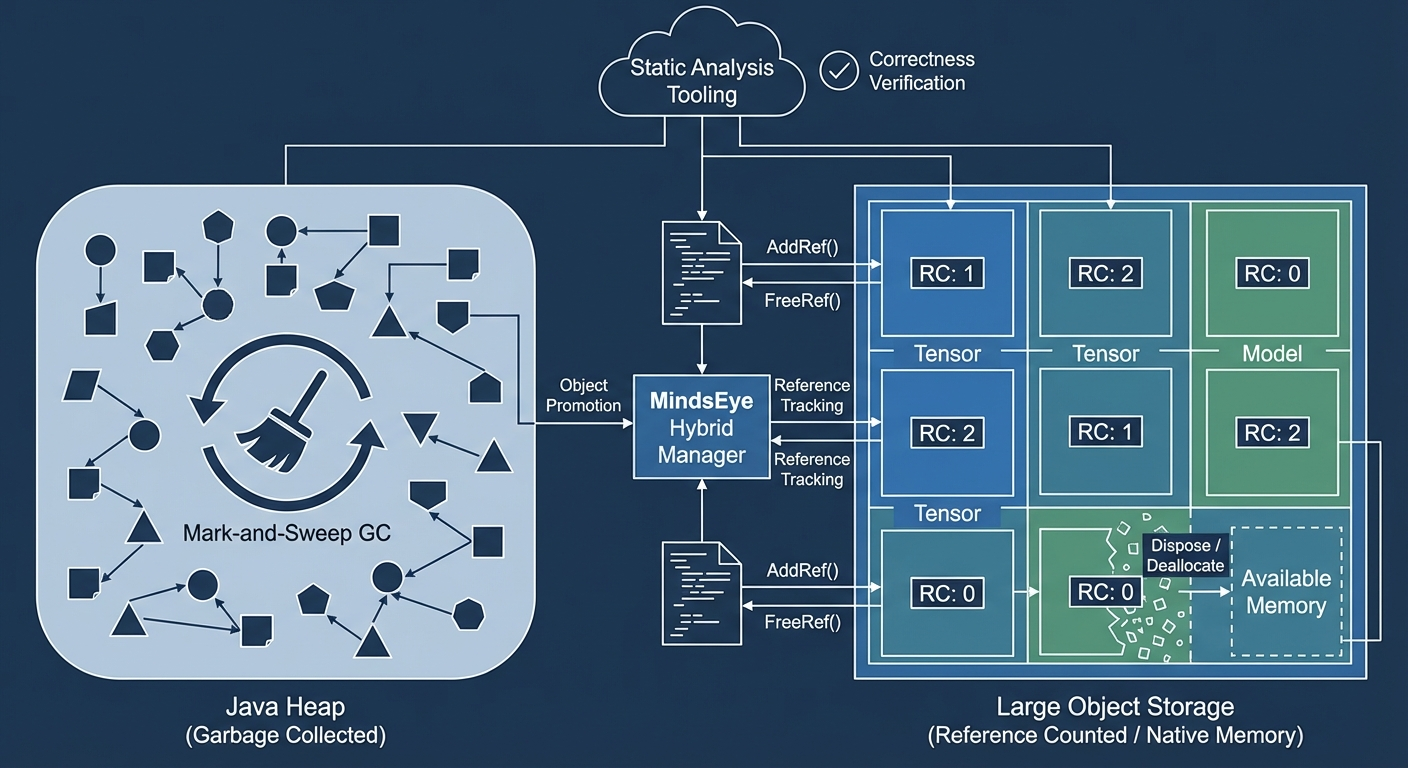
A comprehensive research paper presenting MindsEye, a hybrid memory management system combining reference counting with Java's garbage collection for deep learning applications.
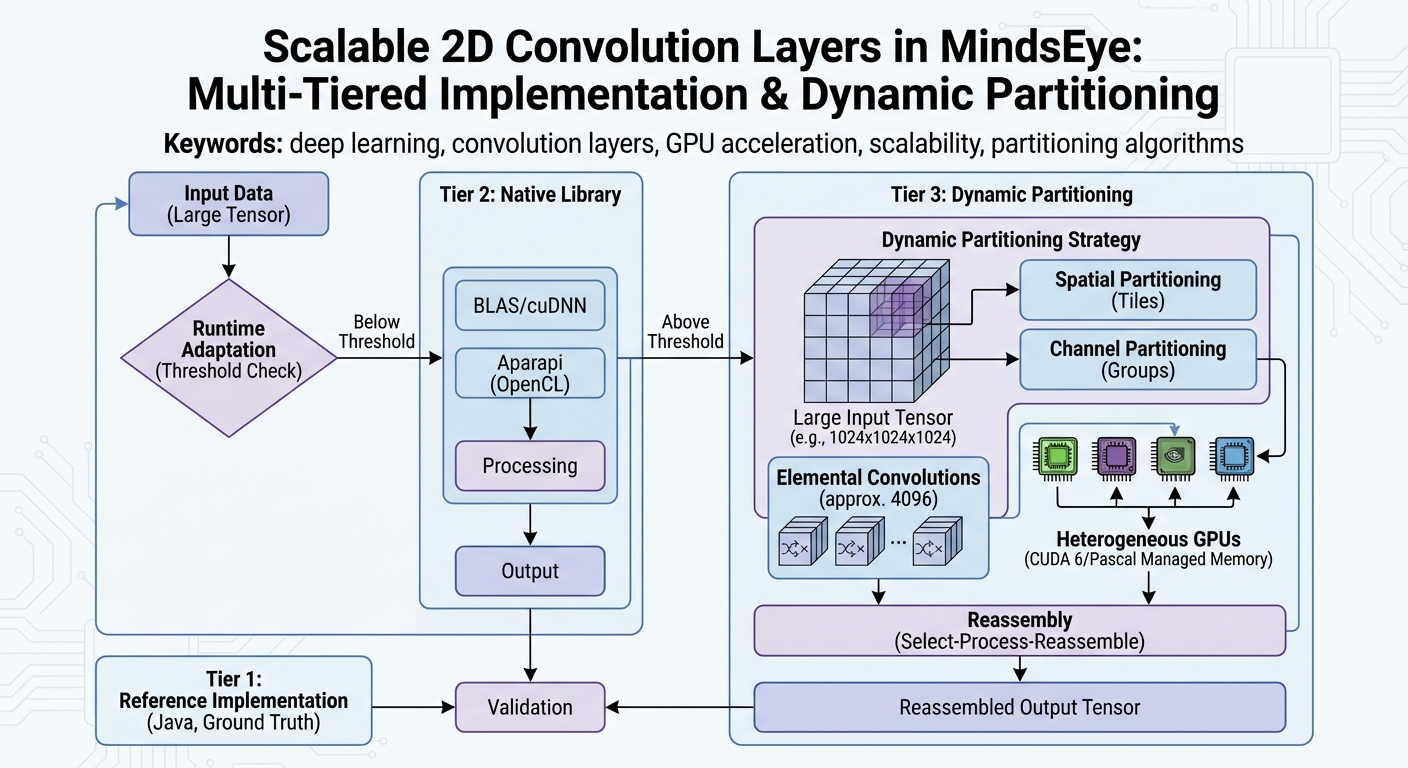
A comprehensive methodology for implementing scalable 2D convolution layers in neural networks, addressing GPU memory constraints through dynamic partitioning
A novel framework unifying compression-based text classification with entropy-optimized data structures for efficient, interpretable AI systems