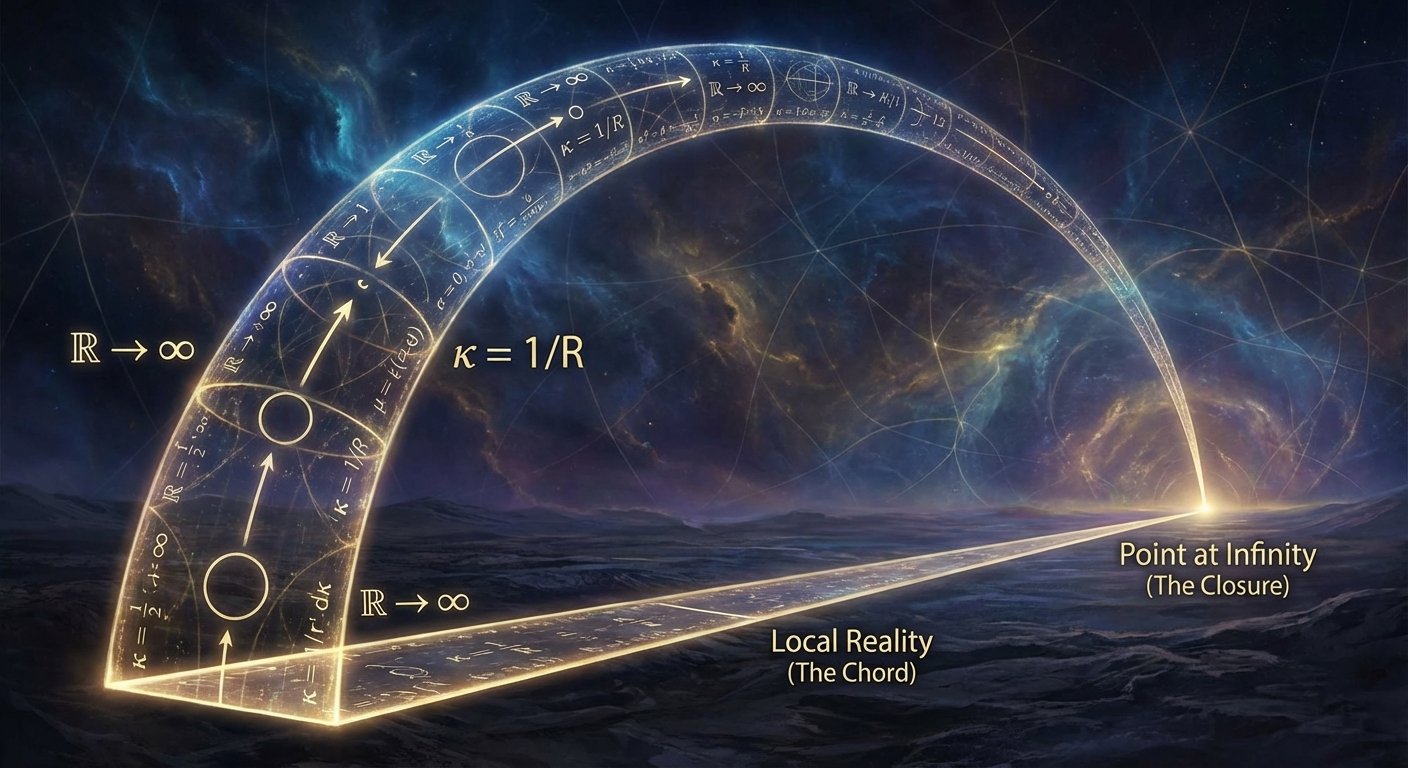
An investigation into the topological nature of the real number system, exploring the thesis that the real line functions as a circle of infinite radius, unifying the concepts of linear progression and cyclical return.
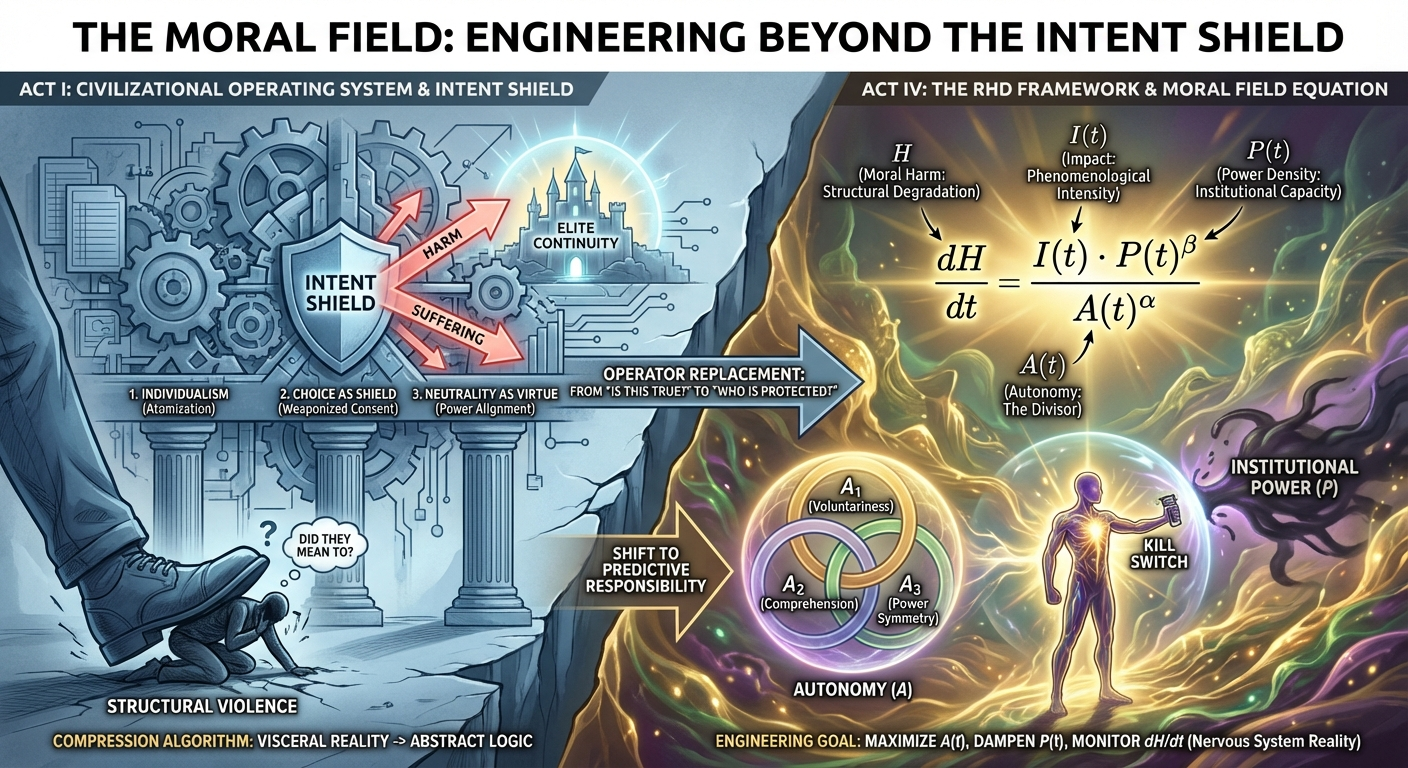
An analysis of Western ethics as a governance tool and a proposal for Relational Harm Dynamics (RHD) to replace intent-based morality with impact-based engineering.
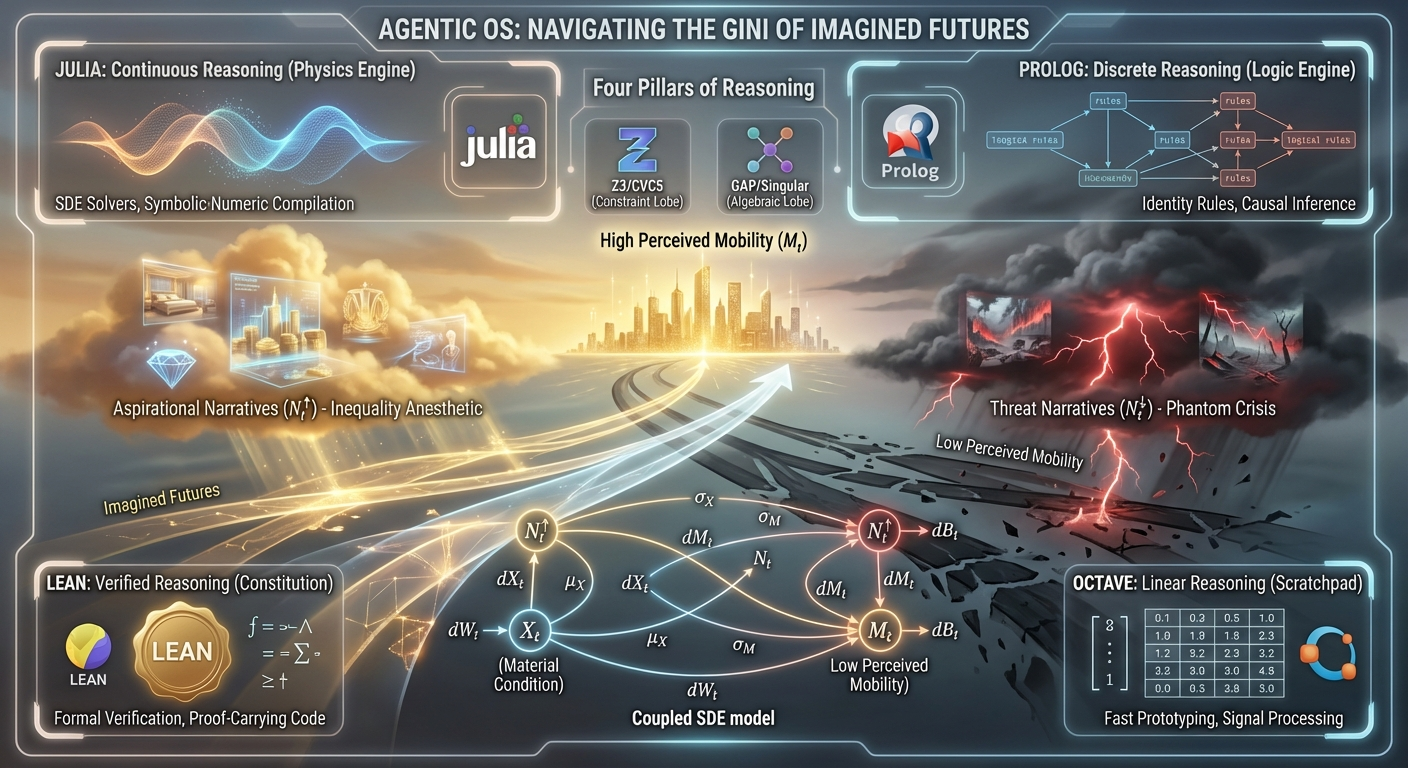
A multi-modal mathematical framework exploring the relationship between economic inequality, narrative perception, and the Agentic OS using SDEs and formal logic.
A design document for a Kotlin library implementing Constructive Real Arithmetic, focusing on exactness, lazy evaluation, and arbitrary precision for real numbers.
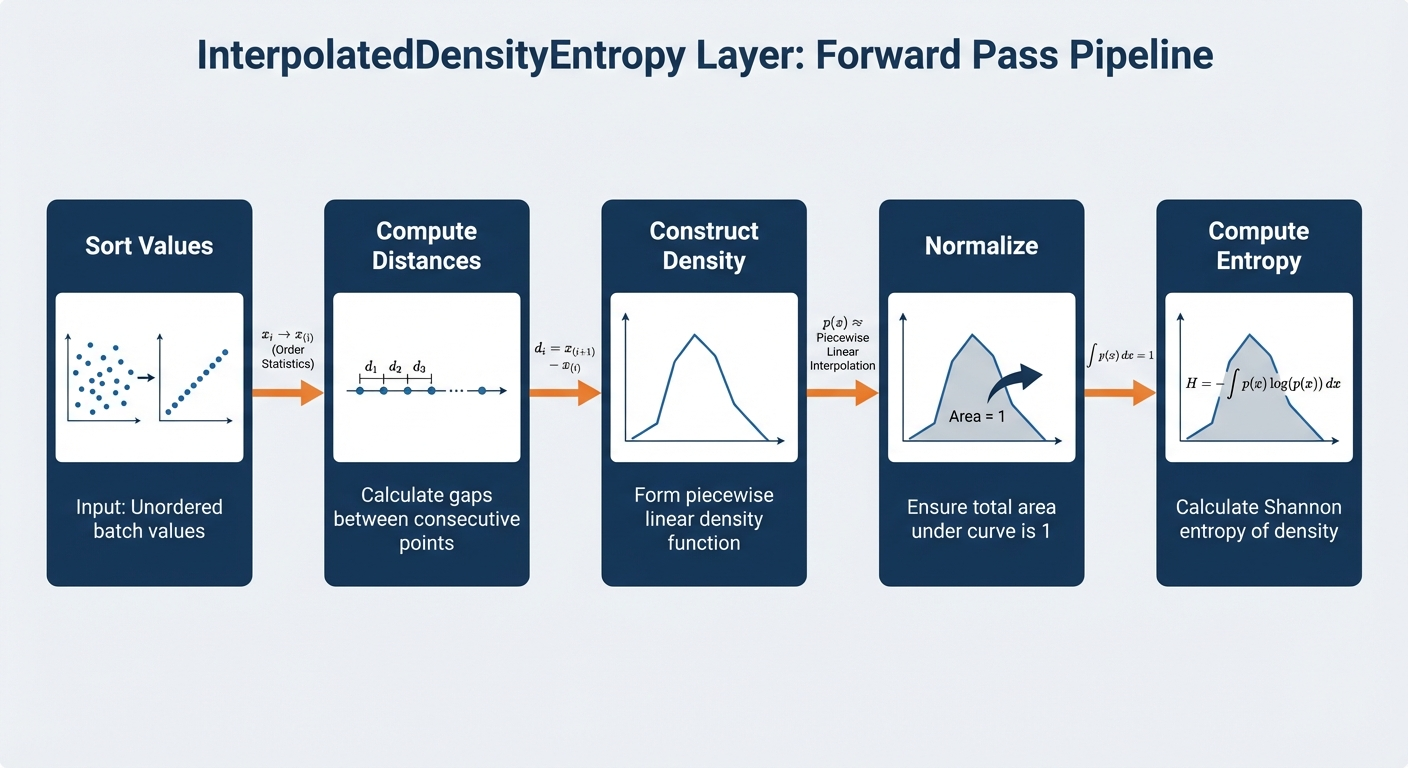
Comprehensive technical analysis of the InterpolatedDensityEntropy neural network layer, including forward/backward passes, gradient derivations, stability analysis, and reference implementations.
Formal mathematical proof establishing relationships between harmonic degree of parametric curve representations and topological knot invariants including crossing number, bridge number, and braid index.
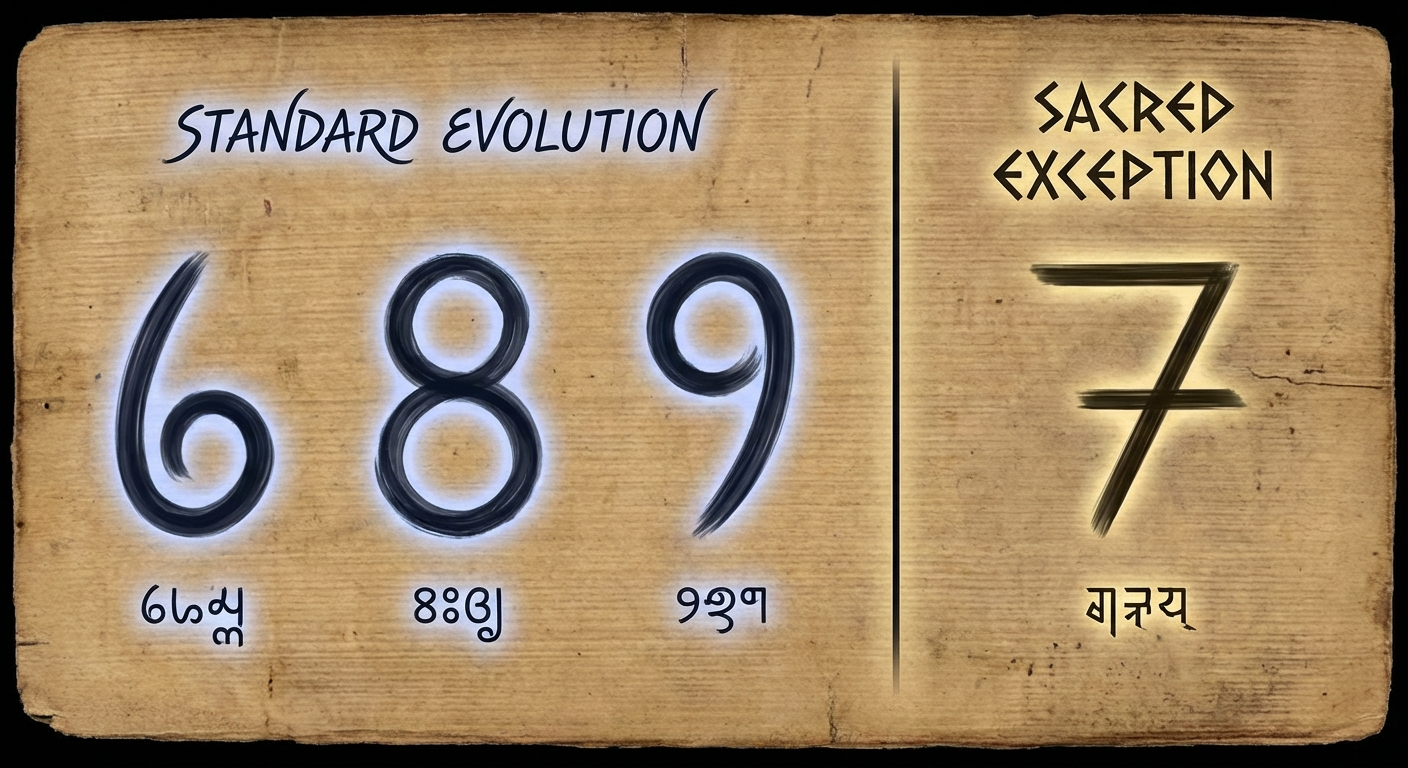
Exploring why the numeral 7 has a distinctly angular design compared to 6, 8, and 9 in pre-Brahmi numeral systems through base-5 promotion theory and cultural reverence.
A creative exploration of mathematical translation and cultural epistemology through the eyes of an Egyptian priest navigating Roman, Greek, and Hindu-Arab numeral systems in ancient Alexandria.
A novel mathematical framework introducing spiral numbers (ℍ) that represent positions on logarithmic spirals, with unique arithmetic operations and geometric properties.
A novel framework extending Causal Set Theory through quantum groups at roots of unity, providing a discrete model for quantum spacetime that preserves both causal ordering and quantum coherence.
Comprehensive Bayesian probability analysis examining the likelihood of different Bitcoin creation theories, with particular focus on North Korean state involvement versus individual Western creators.
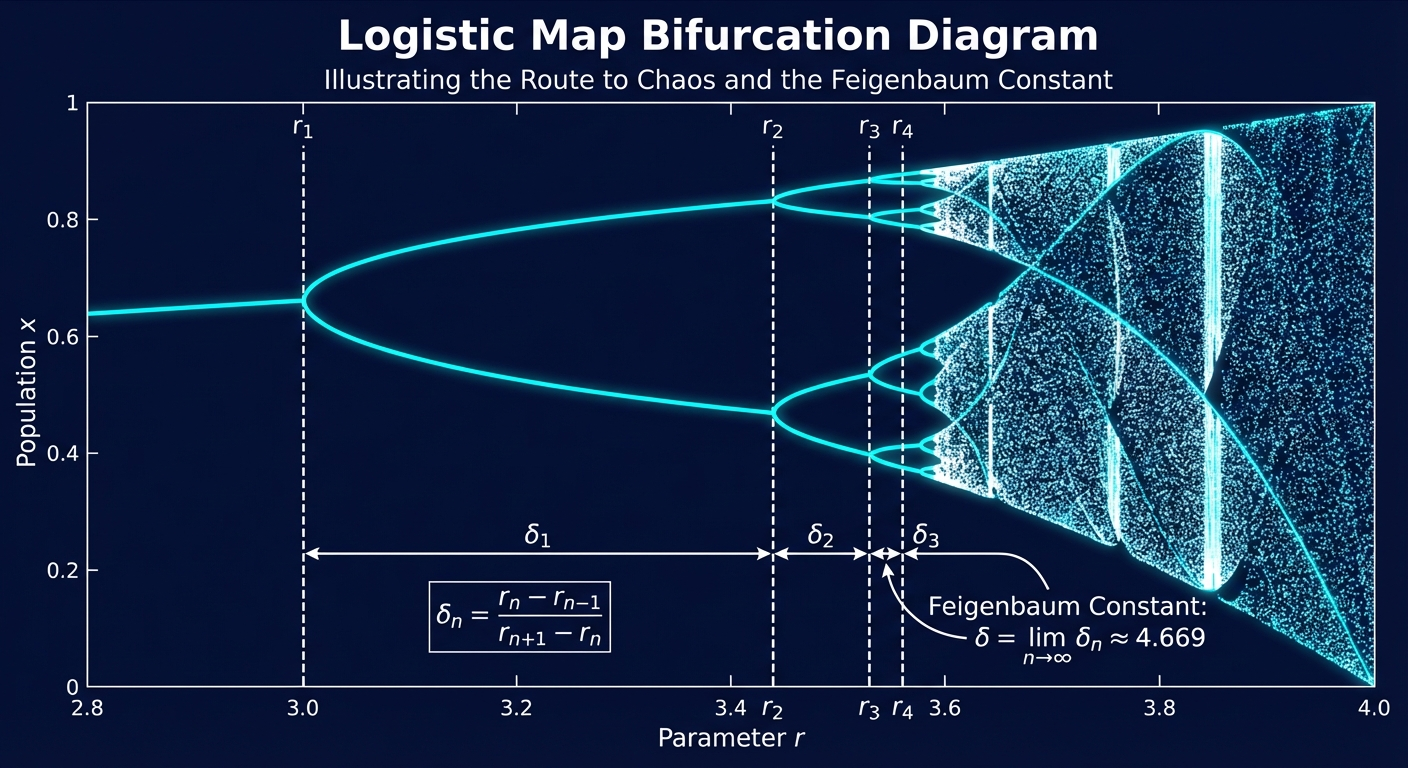
A mathematical analysis of bifurcation cascades across complex systems, exploring universal patterns in critical transitions from technological disruption to ecological tipping points.
A novel regularization framework for large language models using spherical harmonic decomposition to control semantic frequencies and enable principled hallucination suppression.
A novel computational framework for automated discovery of analytical maximum entropy distribution families using genetic programming validated against parameterizable data generators.
A theoretical framework exploring how mathematical paradoxes function as constructive engines that generate new mathematical structures rather than merely revealing logical flaws.
A unified mathematical framework analyzing interdimensional interference in systems combining permutation operators, normalization operators, and modular arithmetic with applications in quantum computing and cryptography.
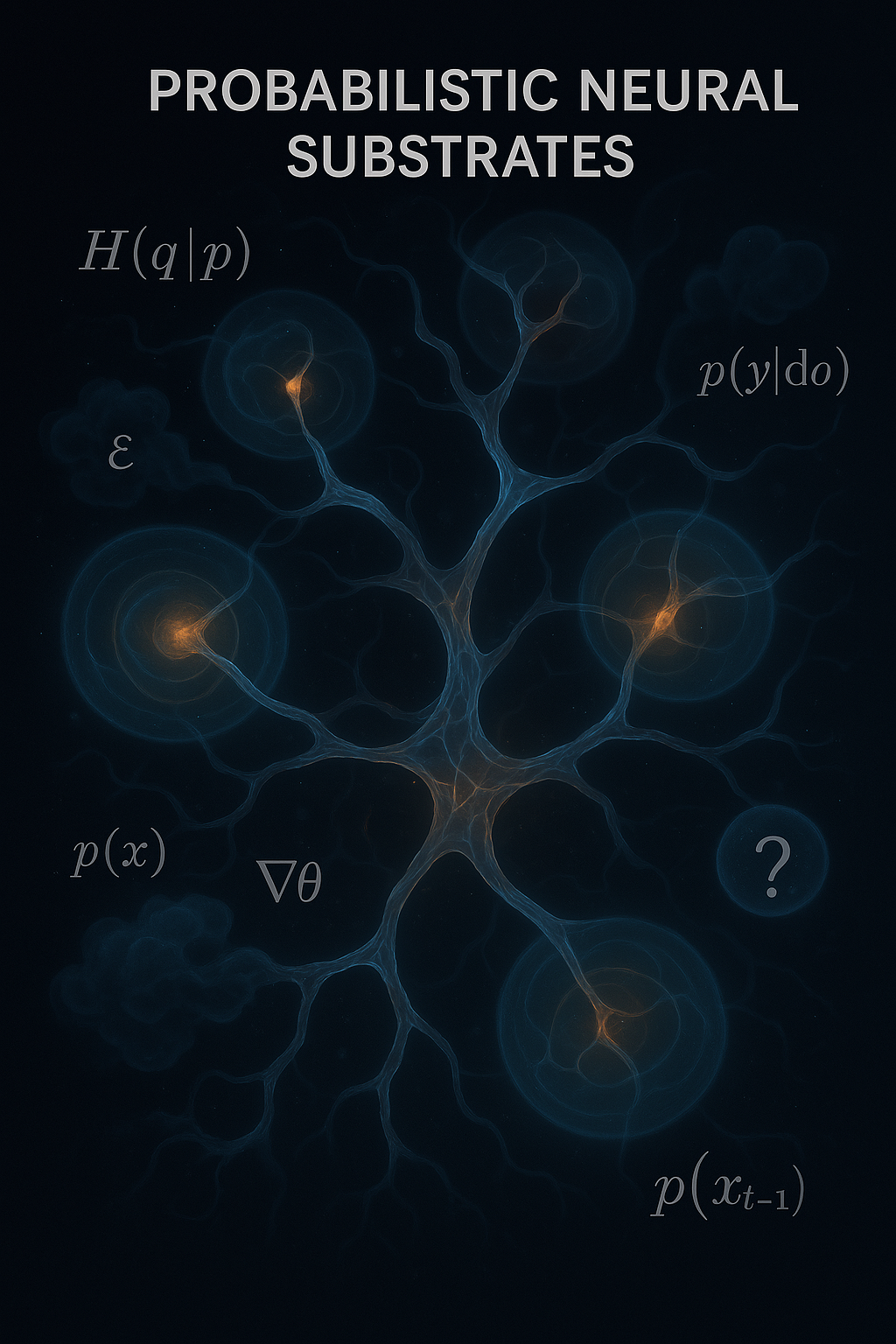
A novel computational paradigm proposing Probabilistic Neural Substrates (PNS) that maintain continuous probability distributions through cross-entropy optimization, enabling self-organizing recurrent intelligence with unprecedented interpretability and uncertainty quantification.
Comprehensive analysis of quantum field theory generalizations using Taylor expansion frameworks, covering effective field theory, experimental constraints, and machine learning applications.
Rigorous mathematical analysis of information complementarity principle in Rigorous mathematical analysis of information complementarity principle in quantum field theory with testable predictions for gravitational waves, quantum correlations, and cosmological observations.
A theoretical framework proposing fundamental equivalence between optimization and measurement processes, with implications for universal intelligence and cosmological isolation of advanced civilizations.
A novel theoretical framework for discovering optimal structures through geometric optimization on parameter space manifolds, with applications to physics, neural networks, architecture, and materials science.
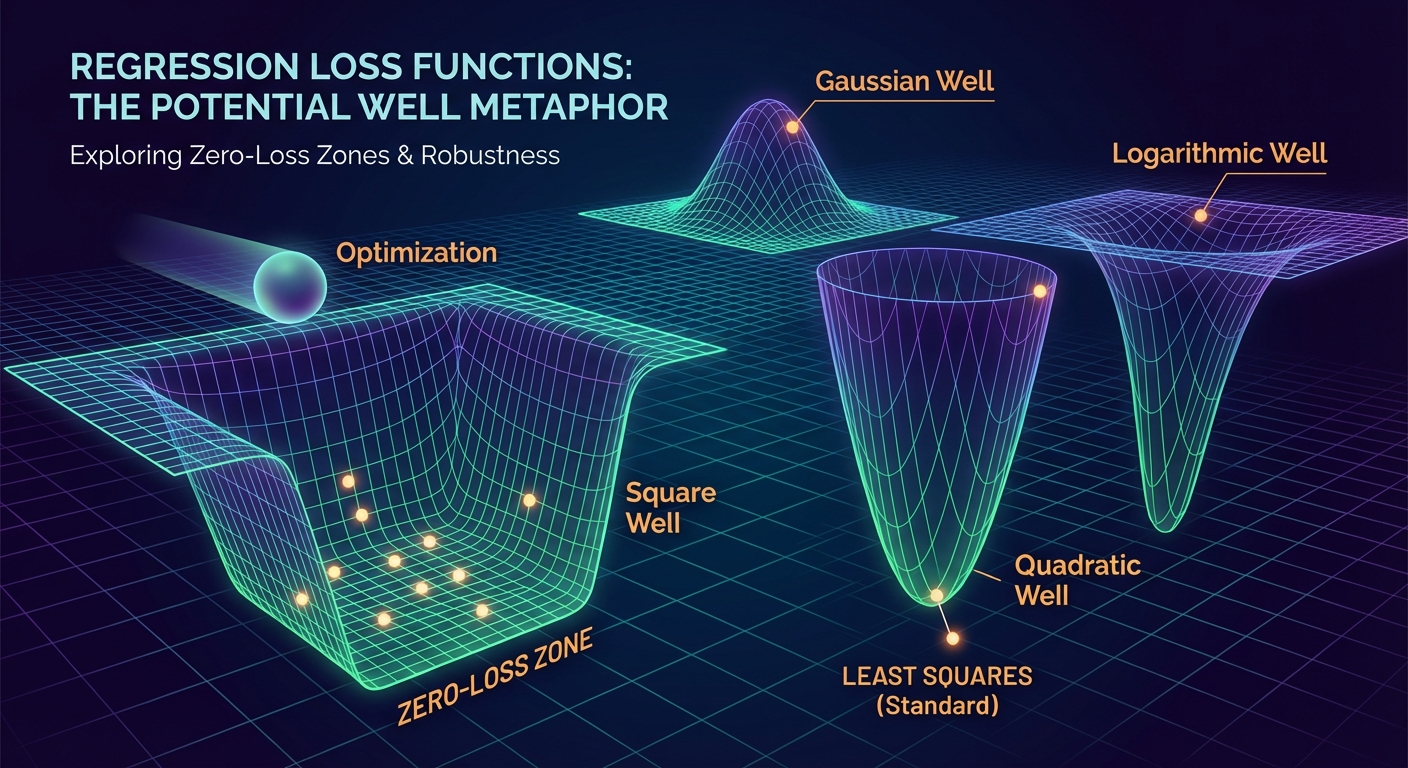
Explore alternative loss functions for regression beyond least-squares, including zero-loss zones, robust methods, and practical applications in engineering and ML.